

As technology advances, modern high-performance engines are faced with ever-increasing demands for performance and efficiency in more compact designs. Lightweight design, a key strategy for achieving these goals, often leads to a reduction in displacement while maintaining or even increasing performance. However, this approach entails considerable challenges, particularly in the area of thermal management.
The increasing importance of thermal management
In high-performance engines, effective thermal management is crucial to ensure optimum operation and extend the service life of the engine components. As engines become smaller, the need for efficient cooling systems increases. Modern engines are equipped with complex networks of cooling ducts designed to efficiently dissipate heat in these smaller spaces. Although these channels, often with very small cross-sections, are essential for maintaining engine performance, they also pose considerable challenges in terms of production and quality assurance.
Precision in production: mastering challenges
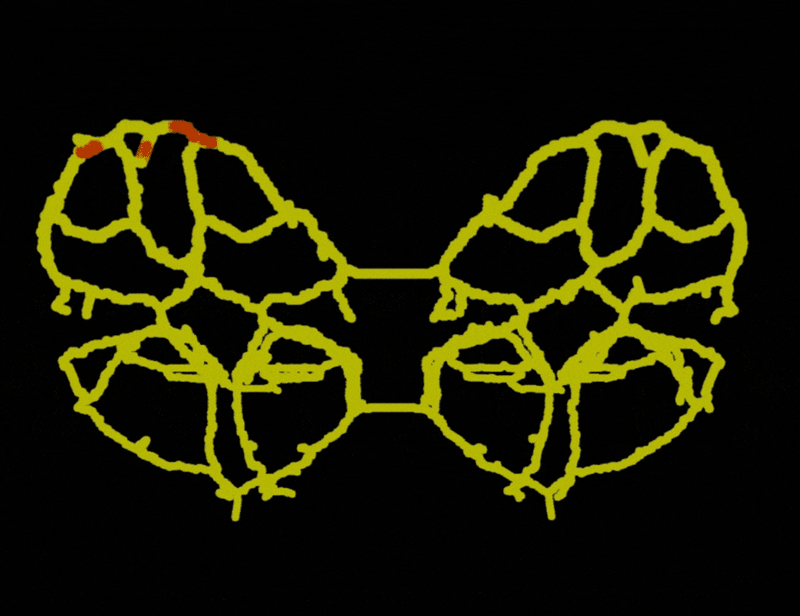
The production of these complex cooling channels requires a high degree of precision. Foundries must ensure that the channels are completely free of burrs and core debris, as these defects could impede the coolant flow and affect engine performance. Residues from sand cores, for example, can lead to localized overheating and ultimately engine failure. Advanced inspection methods are required to ensure the highest quality. Computed tomography (CT) has proven to be one of the most effective techniques for this purpose. This technology enables detailed 3D images of the engine components and thus the detection of defects that would otherwise remain undetected. In combination with neural networks for evaluation, CT scanning becomes even more powerful and provides precise insights into the internal structure of the cooling ducts.
Visualization of defects in cooling channels
3D CT scanning has become an indispensable tool in the quality assurance process for high-performance engines. It provides a non-destructive method of inspecting the internal structures of engine components and reveals even the smallest imperfections. For cooling ducts, 3D CT inspection can identify the smallest core debris or other defects that could affect engine performance.
Microvista relies on neural networks, a form of artificial intelligence. Neural networks further improve material inspection by automating the analysis of 3D image data. These networks are trained to recognize patterns and anomalies, enabling fast and accurate identification of defects. This approach not only improves the precision of inspections, but also speeds up the quality assurance process, allowing full inspection cycles to be completed in just around 3 minutes.
Outlook: The future of engine production
As the demands on high-performance engines grow, the technologies used to manufacture and maintain these engines must also evolve. Capabilities such as 3D CT scanning and advanced materials testing not only improve current manufacturing processes, but also pave the way for future advances. These technologies are particularly important for ScanExpress-related applications, where temporary use by rental provides additional flexibility. By staying at the forefront of these technological developments, manufacturers can ensure that their engines meet the highest standards of performance, reliability and efficiency. As we continue to explore the potential of these tools, the future of engine manufacturing looks both promising and exciting.