

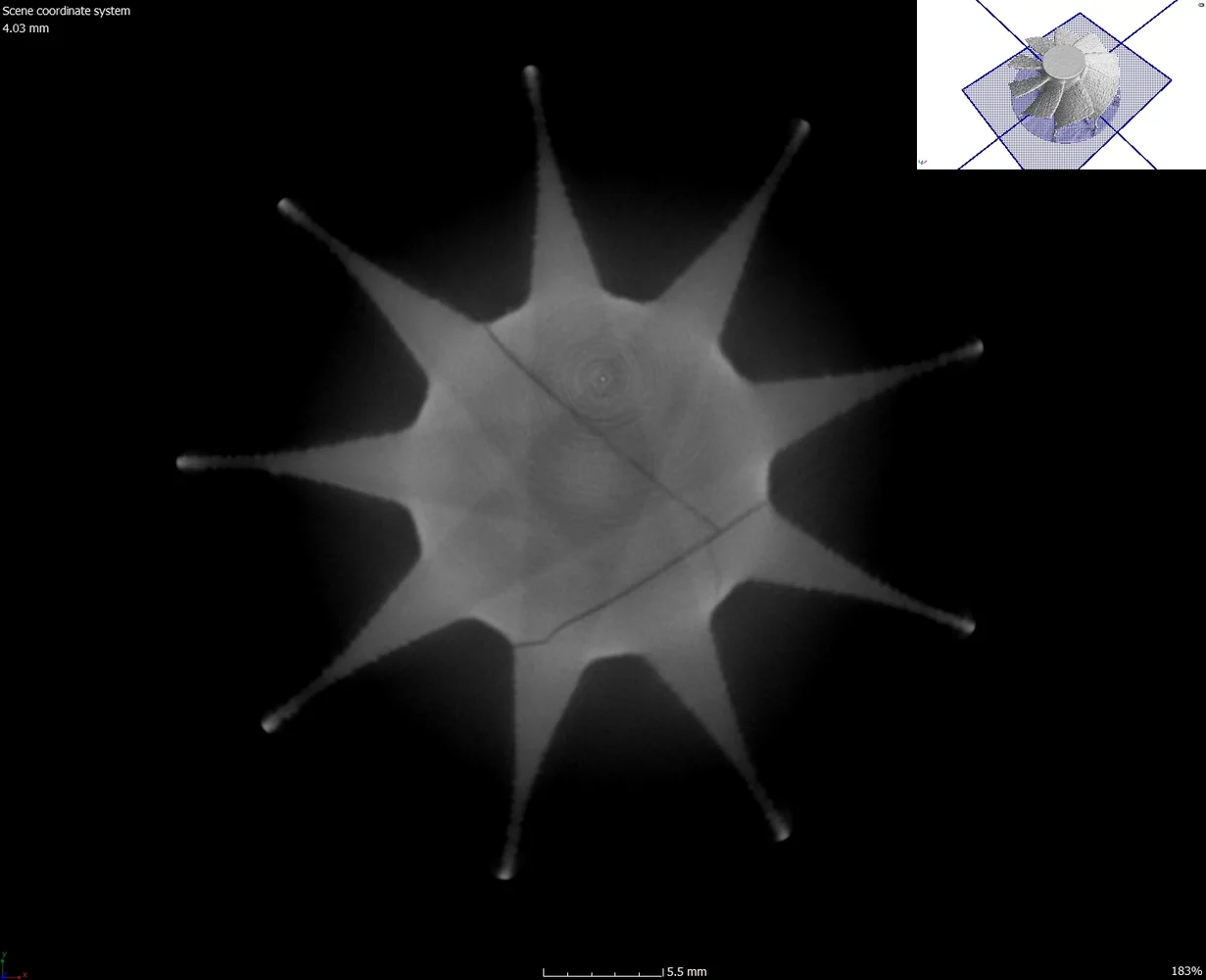
Challenges with additively manufactured components
Additive manufacturing is still a relatively new manufacturing method that can be used to develop very complex component shapes with intricate internal structures that can be used in a variety of ways.
Materials are applied successively – the product development process therefore requires carefully coordinated parameters.
In order to shorten the development phase, manufacturing defects should be detected at an early stage. Non-destructive testing of additively manufactured components using CT helps here.
Typical faults on metal components include
- Support structure residues in hard-to-reach areas
- Internal defects in the component
- Cracks
The following problems frequently occur with 3D plastic printing:
- Over- or under-extrusion
- Threads tighten
- Local overheating
CT makes it possible to capture complex additively manufactured components in their entirety: even hidden and difficult-to-access surfaces can be inspected. In addition, the basis for a target/actual comparison can be created.
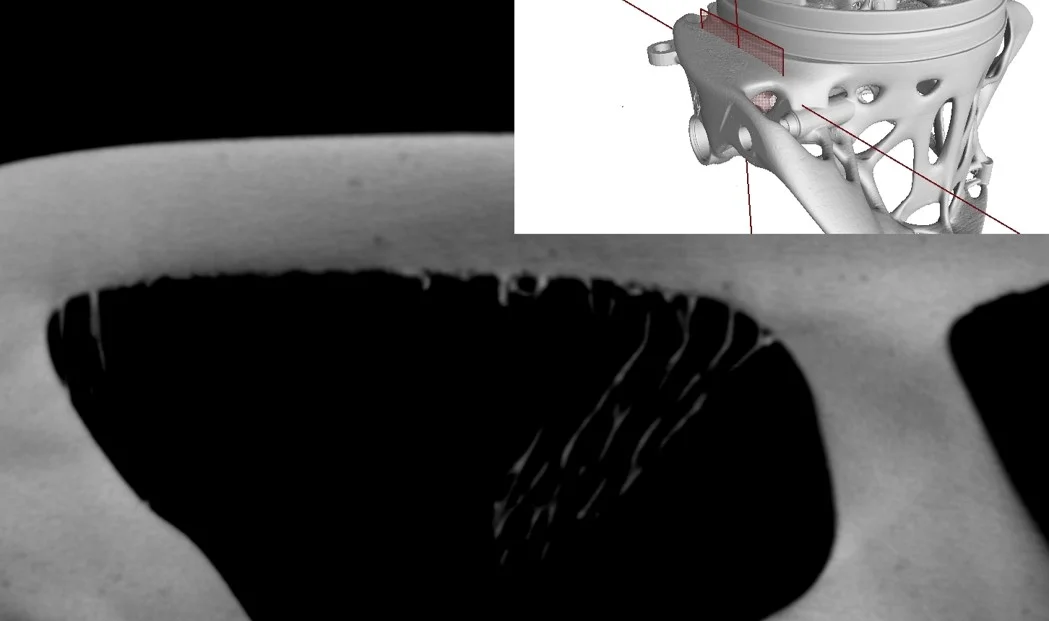
CT image shows support structure remnants
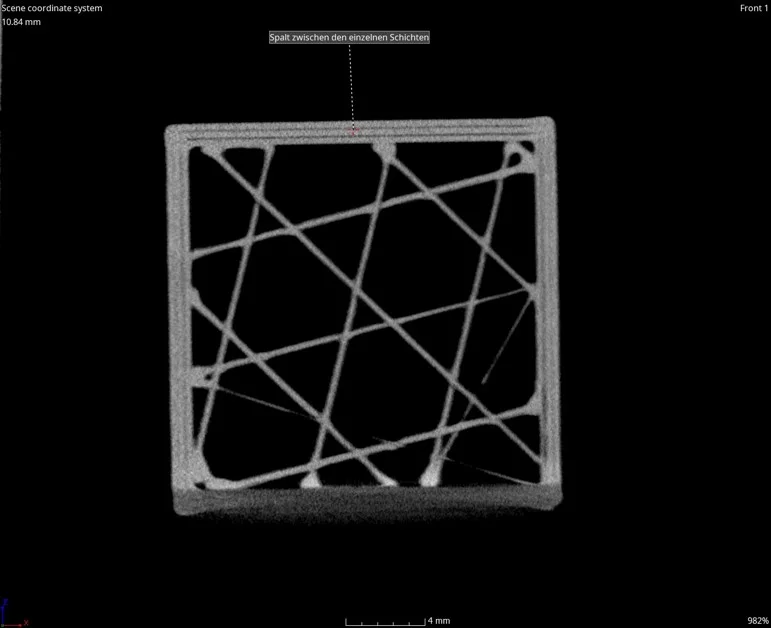
CT image shows delamination
Practical example: Inspection of an aluminum wheel carrier with a complex structure
The challenge
Due to the complex manufacturing process of additive manufacturing products, such as wheel carriers, the individual production stages must be precisely coordinated. Fast feedback on the quality of the wheel carrier right at the start of the process is therefore extremely important due to its complex bionic structure.
Possible consequences
If manufacturing faults are not detected or only insufficiently detected, this can lead to high reject rates. An unreliable analysis can have serious consequences, especially in the case of safety-relevant chassis components: A failure of the wheel carrier increases the risk of a serious accident.
Advantages of the CT test
CT inspection shortens the development cycles in additive manufacturing and addresses the risks identified by the FMEA. In addition, non-destructive testing reduces the number of expensive prototypes required for a variety of features.
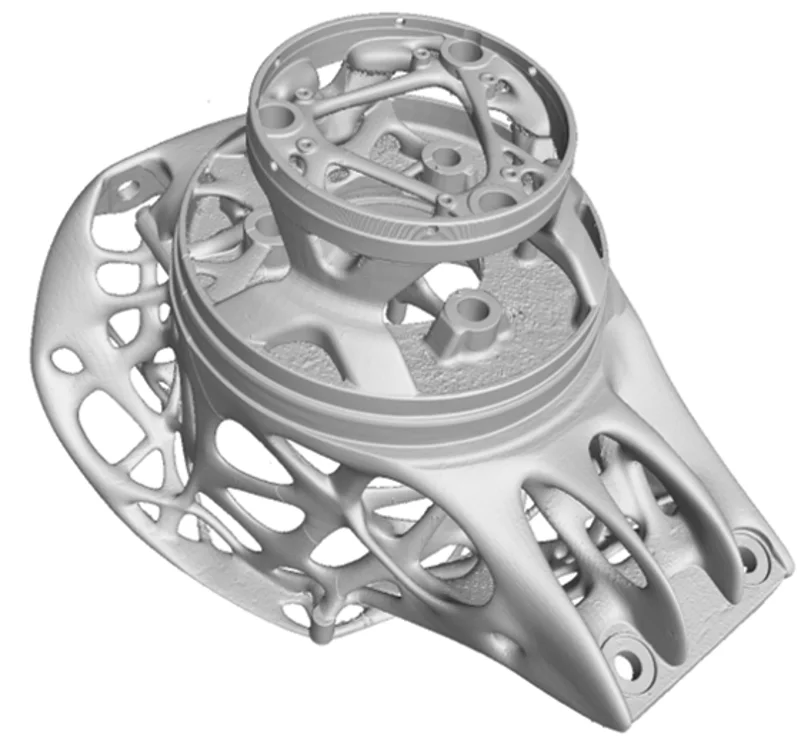
Aluminum wheel carrier