

Fossils are time capsules of Earth’s history – they provide fascinating insights into long-gone worlds. To deepen these insights, the University of Halle is working with state-of-the-art technology: two employees from the Central Repository for Natural Science Collections (ZNS) recently visited Microvista to examine exhibits using industrial computed tomography (CT).
Several unusual skulls were scanned, including those of a water buffalo, a pygmy hippopotamus (Pygmy Hippopotamus) and a Hyrachyus, an extinct relative of the tapir. This fossil comes from the Geisel Valley, an important fossil deposit for Central European vertebrates from the Eocene epoch.
The aim of the visit: The high-resolution 3D data will enable the curator of the collection to analyse the brain morphology of these animals in detail – an important step towards a better understanding of phylogenetic developments and evolutionary patterns.
The Geiselthal Collection at Martin Luther University Halle-Wittenberg
The Geisel Valley Collection at Martin Luther University Halle-Wittenberg comprises around 50,000 fossils from the former lignite mines in the Geisel Valley, approximately 20 km south-west of Halle (Saale). Over more than 80 years of excavation work (1920s to 2000s), exceptionally well-preserved remains of subtropical flora and fauna from the Eocene epoch have been recovered – including land-dwelling crocodiles, giant flightless birds and prehistoric horses. The state of preservation of many fossils is particularly remarkable: some are three-dimensional, with soft tissues, stomach contents and original colours. As the original sites are now flooded, no further finds are possible. The collection is considered unique in the world and is protected as a “nationally valuable cultural asset” – an important basis for current research on biodiversity in the Eocene climate optimum.
Precision in manufacturing: overcoming challenges
The CT analysis of large zoological fossils poses unique challenges. In this case, the high material density of the fossilised skulls and the considerable size of some of the recent skulls were particularly challenging. However, these hurdles were mastered with ease using Microvista’s industrial CT technology: within a very short time, detailed 3D models were generated, which now serve as the basis for further scientific analysis.
Microvista – Partner for Archaeology & Palaeontology
The successful collaboration with the University of Halle demonstrates once again that Microvista is not only at home in industrial quality assurance, but also a powerful partner for research institutions, museums and archaeological institutes.
Im CT-Labor von Microvista sind unter anderem folgende Leistungen möglich:
- Hochauflösende 3D-Scans von organischen und anorganischen Materialien - ideal für Fossilien, Keramik, Metalle oder anthropologische Funde.
- Kontaktfreie Innenansichten ohne Beschädigung des Objekts.
- Digitale Volumenmodelle, z. B. für Rekonstruktion, Visualisierung oder 3D-Druck.
- Präzise Analysen von Dichteverteilungen, inneren Strukturen oder Einschlüssen.
- Erfahrung mit sensiblen Einzelstücken - von archäologischen Artefakten bis zu musealen Sammlungsobjekten.
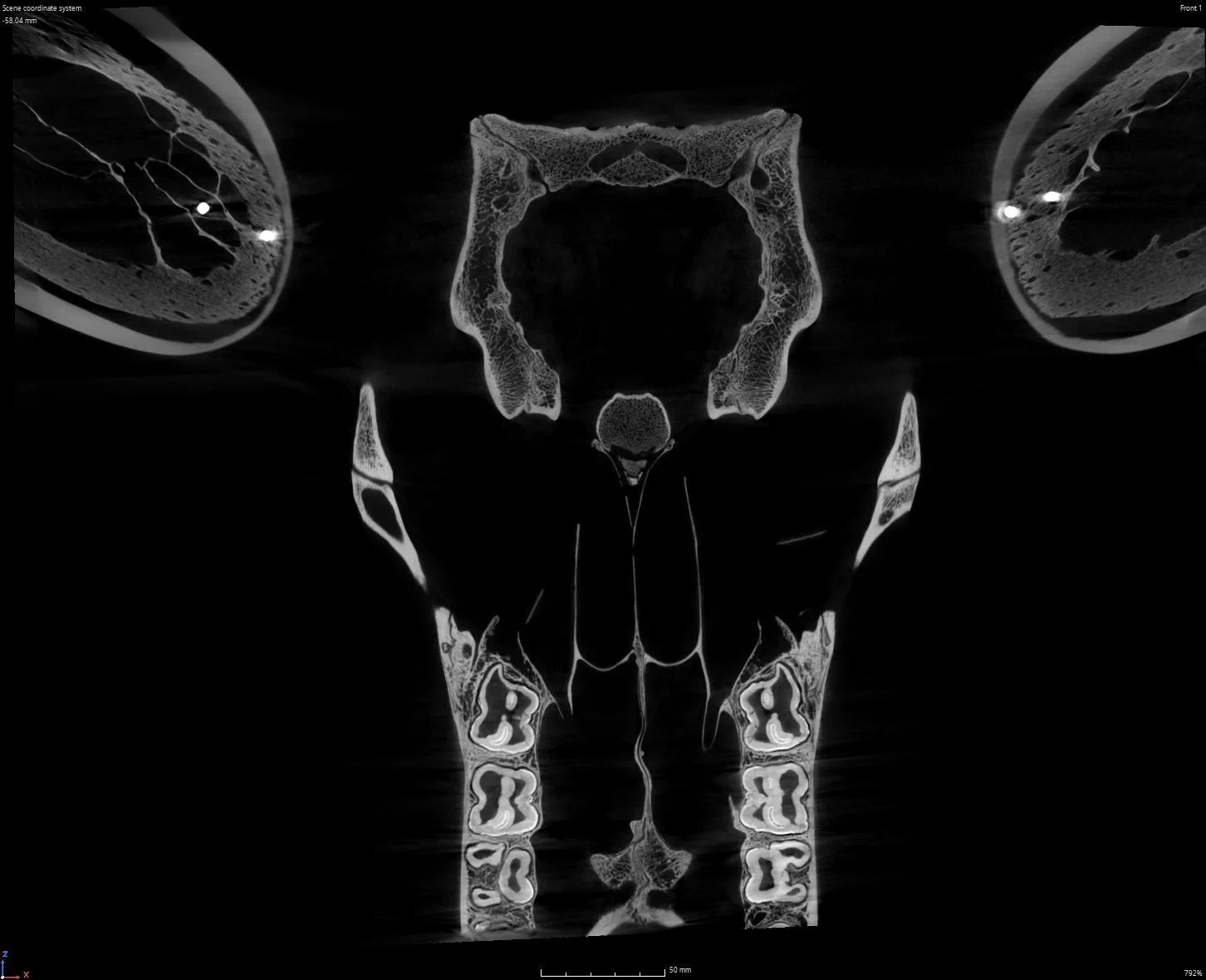
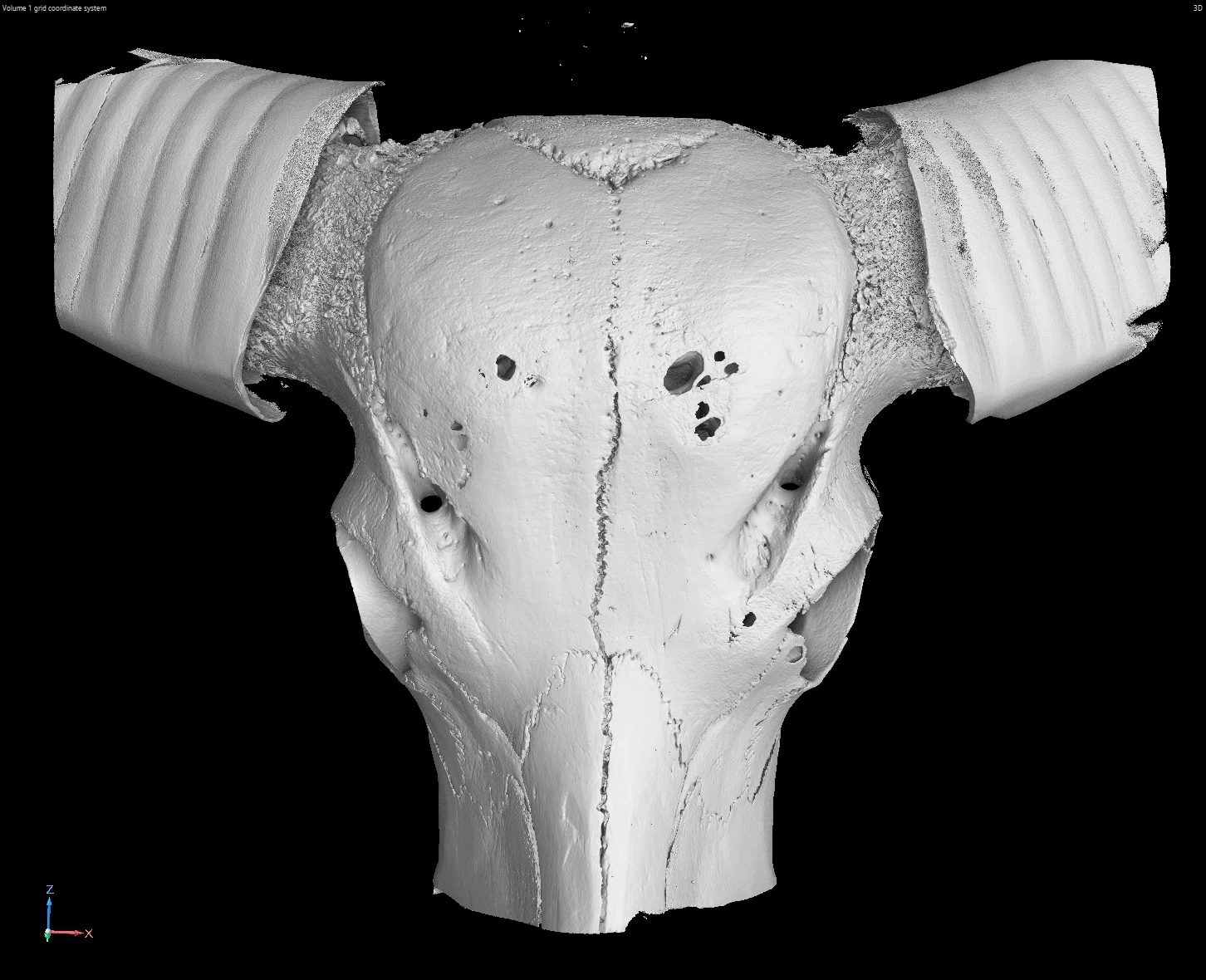
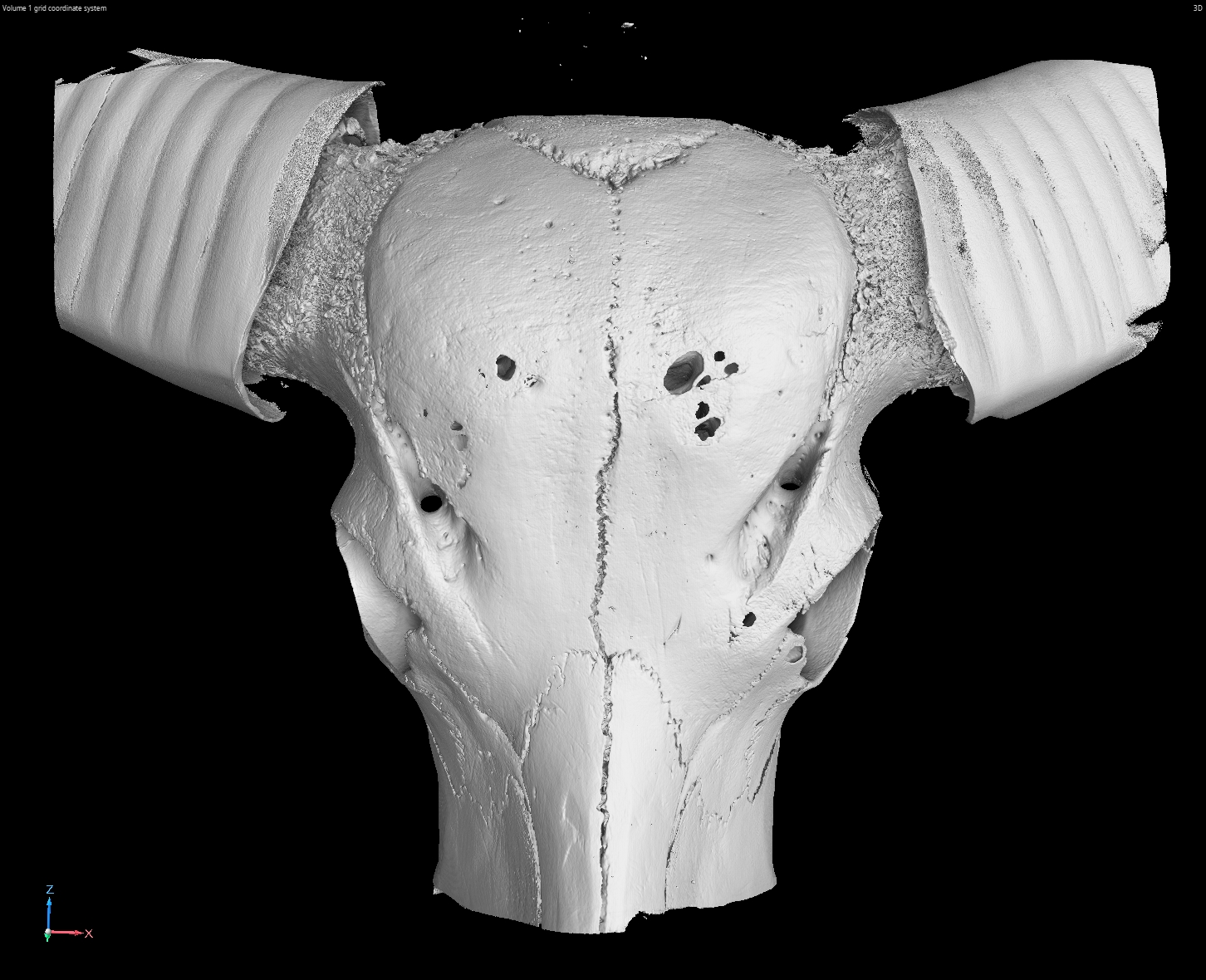
High-resolution 2D and 3D scans of a water buffalo skull (Bubalus arnee) with a volume of over one cubic metre.
Service
Description
Big part scans
up to 0.02 mm resolution, even with fossil finds
High-resolution CT scan
envelope circle up to 798 mm, length up to 1.8 m
Material irradiation
stony fossils no obstacle
Cloud analysis
KI-gestützte Automatisierung, TISAX-konform
Multiple scanning modes
axial, helical, laminographic available
Conclusion for palaeontology
Whether for palaeontological research projects, anthropological studies or conservation documentation: Microvista offers archaeological and palaeontological CT services at the highest technical level – fast, precise and individually tailored to your requirements.
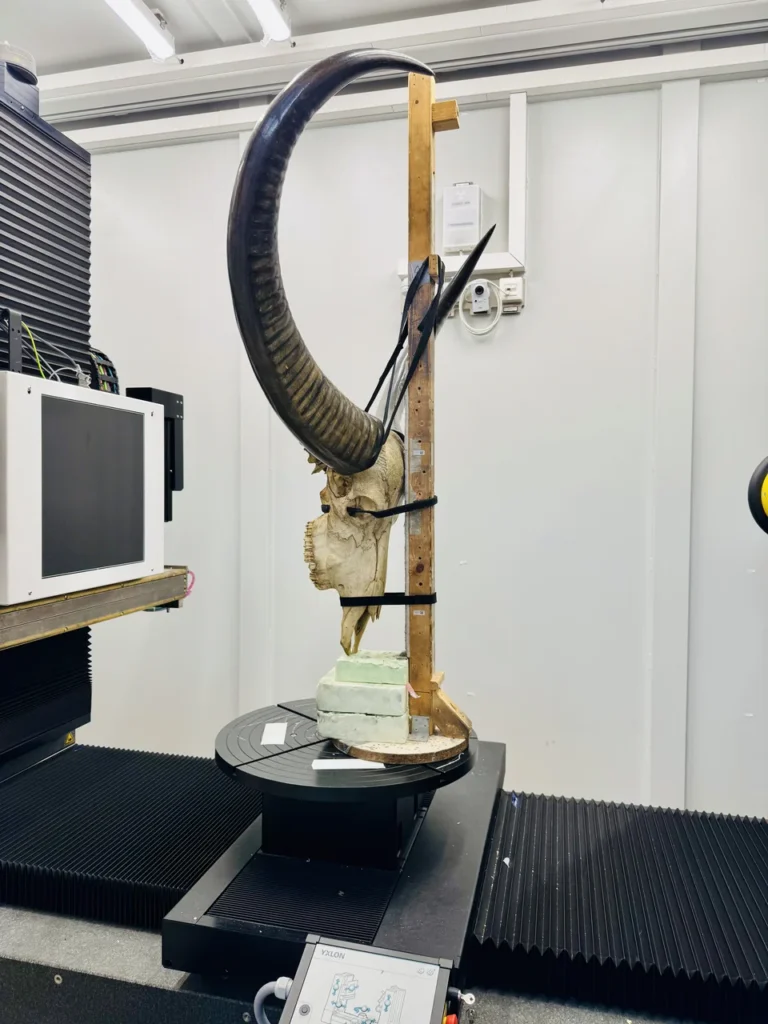
Skull of a wild water buffalo mounted in the CT scanner – the brain region of the exhibit was scanned within 36 minutes. The water buffalo is native to Asia and is kept as a farm animal.
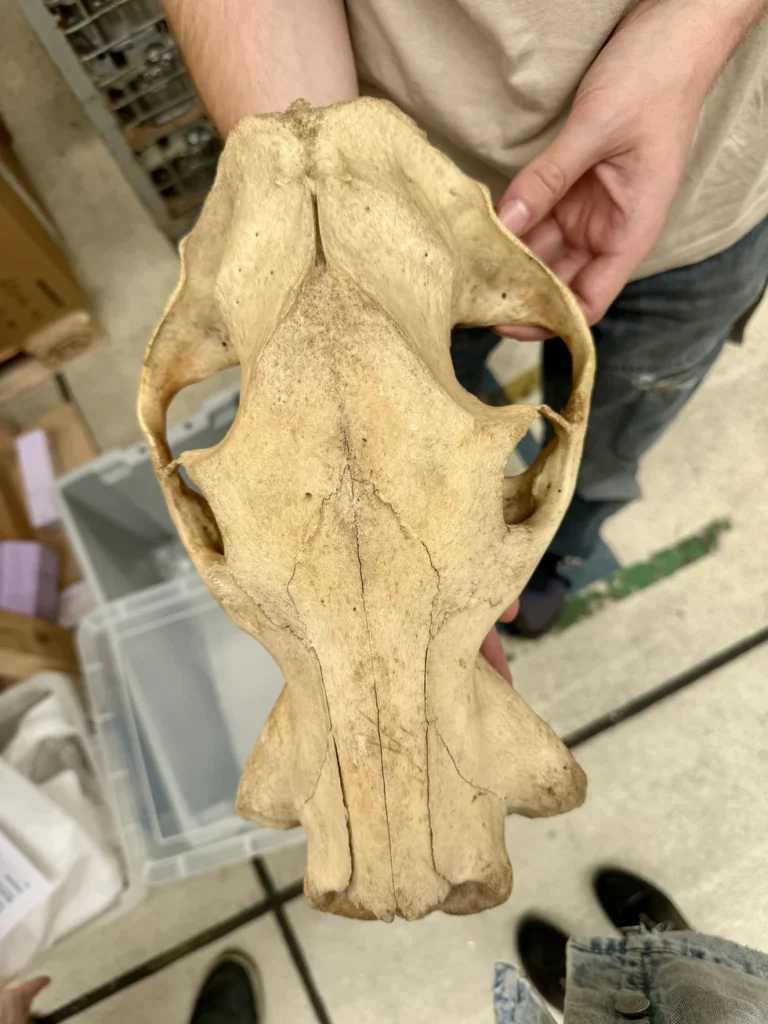
Skull of a pygmy hippopotamus (Choeropsis liberiensis) – Pygmy hippopotamuses are a rare species native to the forests and swamps of West Africa.
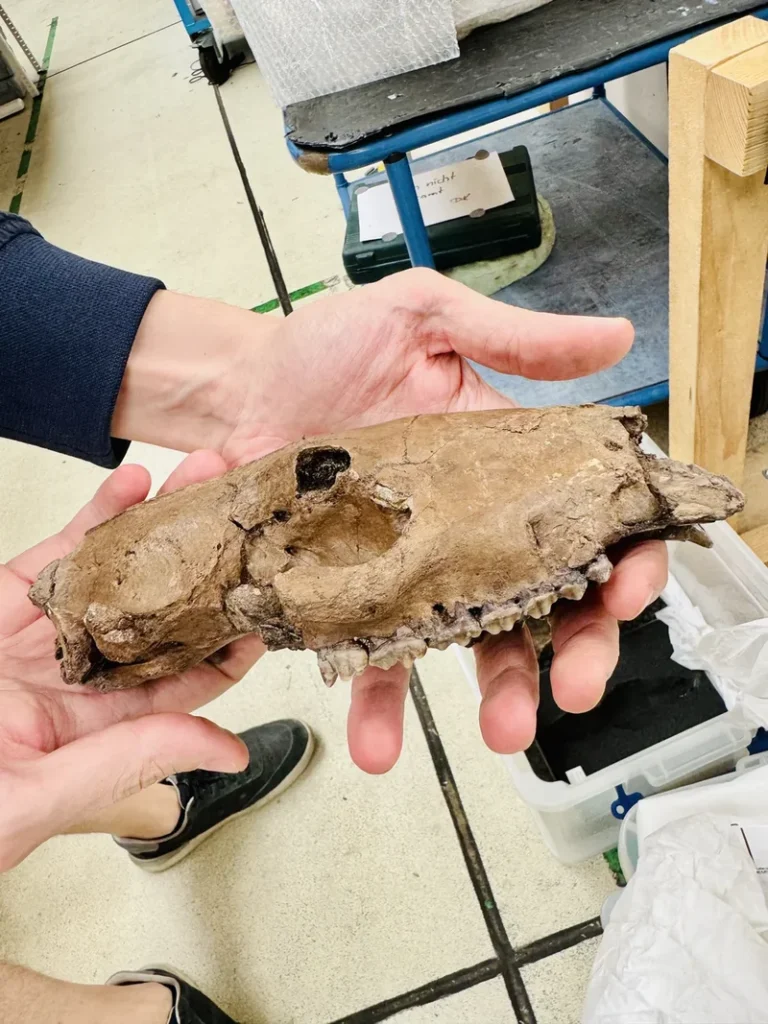
Skull of an extinct Hyrachyus – a large mammal similar to today’s tapir that lived during the Eocene epoch, around 45 million years ago.
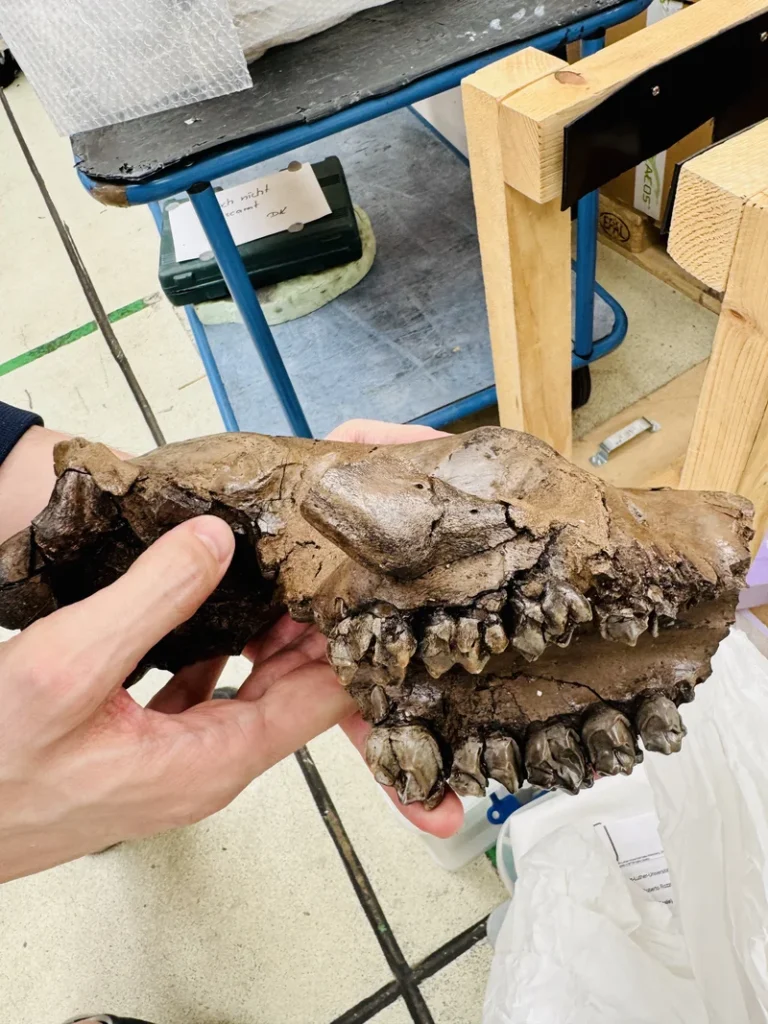
Upper jaw of an extinct Hyrachyus – a large mammal similar to today’s tapir that lived during the Eocene epoch, around 45 million years ago.