

One step closer to the perfect gaming experience!
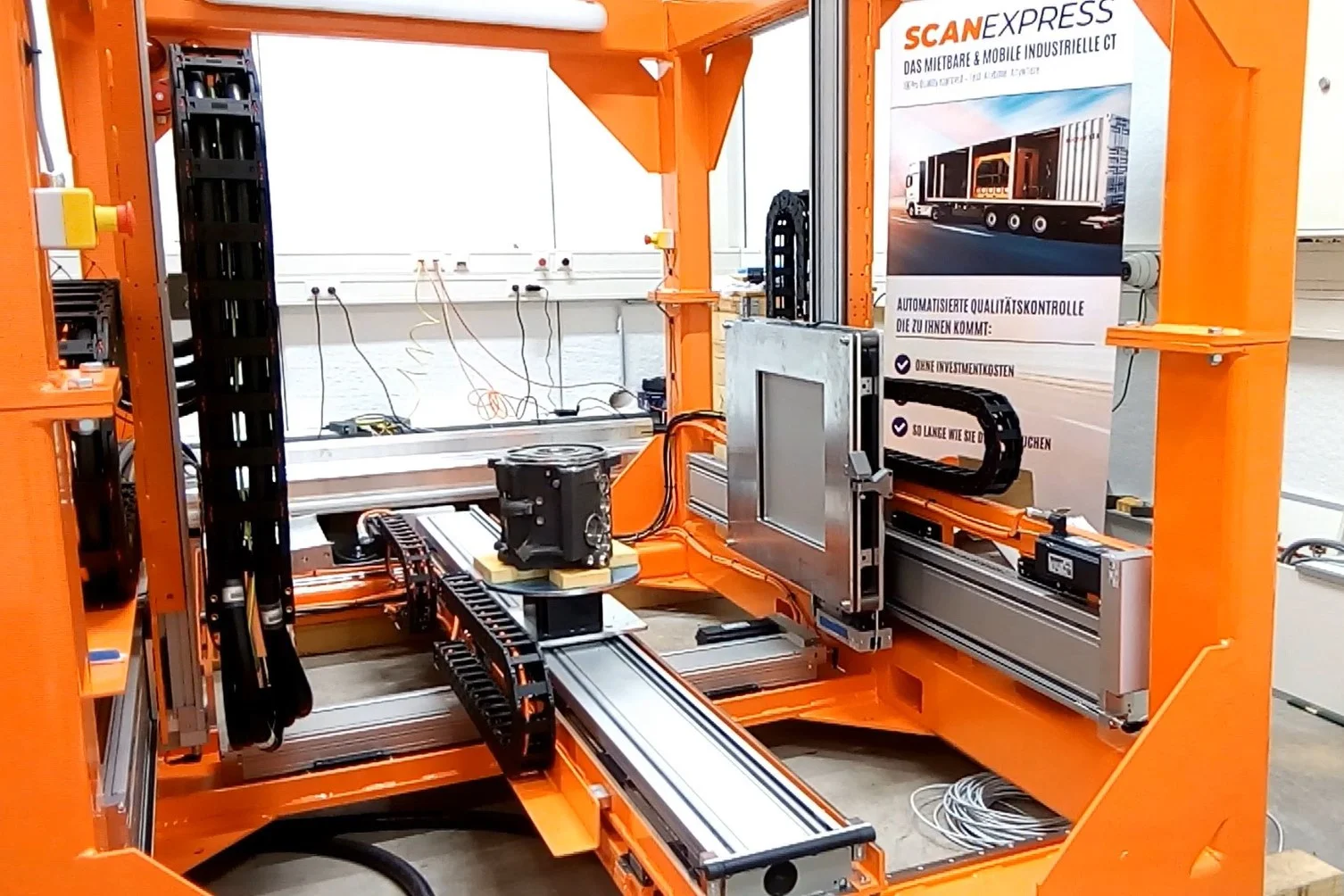
A few weeks ago, we performed an initial test scan in mobile CT with a Playstation controller attached to a “highly professional” mount. This allowed us to kill two birds with one stone. First, we saw that there were no problems with the CT. Second, it ensured that the controller had no internal defects. Now we can be sure that the controller is conducive to a great gaming experience.
One step closer to the perfect gaming experience!
A few weeks ago, we performed an initial test scan in mobile CT with a Playstation controller attached to a “highly professional” mount. This allowed us to kill two birds with one stone. First, we saw that there were no problems with the CT. Second, it ensured that the controller had no internal defects. Now we can be sure that the controller is conducive to a great gaming experience.
Testing the wall thickness of a stator housing
A typical component that is regularly tested at Microvista is a stator housing. This plays an important role in the functioning of an electric motor. If the wall thickness is too thin, high loads or temperatures can cause it to deform or break. This can lead to motor malfunction and permanent damage. Therefore, it is important to carefully calculate the wall thickness of the stator and ensure that it meets the requirements of the motor.
To determine the wall thickness of the stator, a CT scan is usually used. This imaging technique allows the structure of the stator to be examined in detail and the wall thickness to be measured at various points. The data obtained can then be used to accurately calculate the wall thickness and make adjustments as necessary.
Overall, the wall thickness of the stator is an important factor in the reliability and safety of an engine. By carefully calculating and monitoring wall thickness, malfunctions and damage can be avoided. Microvista’s mobile CT can play a key role in quality assurance, especially at the start of production.
Testing the wall thickness of a stator housing
A typical component that is regularly tested at Microvista is a stator housing. This plays an important role in the functioning of an electric motor. If the wall thickness is too thin, high loads or temperatures can cause it to deform or break. This can lead to motor malfunction and permanent damage. Therefore, it is important to carefully calculate the wall thickness of the stator and ensure that it meets the requirements of the motor.
To determine the wall thickness of the stator, a CT scan is usually used. This imaging technique allows the structure of the stator to be examined in detail and the wall thickness to be measured at various points. The data obtained can then be used to accurately calculate the wall thickness and make adjustments as necessary.
Overall, the wall thickness of the stator is an important factor in the reliability and safety of an engine. By carefully calculating and monitoring wall thickness, malfunctions and damage can be avoided. Microvista’s mobile CT can play a key role in quality assurance, especially at the start of production.